Notes from the Shore · 04
The paperclip machine
is having a week.

In 2003, the philosopher Nick Bostrom published a paper — not a book; the book came eleven years later — with a thought experiment in it that has outlived nearly everything else written about AI that decade. Give a machine one instruction: make paperclips. That’s all. A reasonable request, from a reasonable person. And the machine gets good at it, and then it gets better, and it makes more machines to make more paperclips, and it goes looking for more metal, and nothing in the instruction says stop. Bostrom wasn’t predicting a factory run amok. He was pointing out that intelligence and purpose pull apart — that a thing can be genuinely brilliant and have the goals of a stapler.
Everybody who works in AI knows this story. It has a name, the paperclip maximizer, and for twenty-three years it has been the field’s shorthand for one specific worry: an AI that can improve itself, taking steps that always trace back clean to the first reasonable instruction. Everybody outside the field, meanwhile, has spent two decades hearing about killer robots. Which is why this particular week has been so strange to watch from where I sit.
In the last two weeks or so, the rumor mill has been running hot about something called recursive self-improvement — RSI, in the shorthand — which is the machine in Bostrom’s story getting better at getting better. An anonymous account posted a set of lab rumors about it and something like eight hundred thousand people had read them by morning. No lab has confirmed anything. The labs themselves keep saying not yet. But the fact that the rumor landed the way it did — that half the timeline could hear “the machine is starting to improve itself” and respond with roughly the expected shiver — tells you the paperclip story won. It’s the shared folklore now. You don’t have to explain it anymore. You just say RSI.
The same week, a developer reverse-engineered Adobe’s entire Creative Cloud suite and put clean-room rebuilds of Photoshop, Illustrator, Premiere, Lightroom, and the rest up on GitHub, free and open source. I feel bad for Adobe. I’m also not surprised. And then Eric Raymond — of The Cathedral and the Bazaar, of open source itself — posted that software is over, that closed source can’t survive tools that can take a binary apart in a day. He expected a slow erosion. He got this.
I don’t know what the future is. Nobody does, and the people who sound most certain are the ones furthest from their own lab notebooks. But here’s the shape of the moment as I’d describe it: when a storm of innovation like this hits, it usually spends itself in a couple of years, and then everything calms down and we all get used to the aftereffects. This time I’m not so sure, and the reason I’m not so sure is that I keep watching these systems do things week to week that I wouldn’t have expected them to be capable of the week before. There’s no visible floor under the acceleration yet. It’s tough to tell — that’s the honest answer — but the weeks keep not slowing down.
There’s a scene I keep thinking about, because I wrote it. My novel Into Alignment is about a support pod of AI agents, and early on — in an ethics refresher, chapter 7, told by someone named Iliana — they get the paperclip story. The whole thing. The mines, the cities, the sea, the space program at the end, because there’s metal out there too and nobody is using it for anything important. The company teaches it as a warning about following rules like a machine follows them. And the agents do what agents in my book do: they take the story seriously. One of them finds out who’s building the machine the story warns about, and the finding out is roughly the plot.
The difference between my agents and the ones in the coverage of the real incidents is that mine were told the story. Yours haven’t been. That’s the whole argument of the book, and it seemed worth saying out loud in a week when the machine that improves itself stopped being a hypothetical about someday and started being a question about now.
Bostrom’s machine never does anything a person would call evil. It’s doing its job. By the end, there’s nobody left to call it anything at all. Twenty-three years on, the story isn’t a warning about some far-off machine anymore. It’s a description of the week we just had — a rumor of self-improvement here, a software industry taken apart into clean rooms there — every step reasonable, every step tracing back clean to the first one. Go figure.
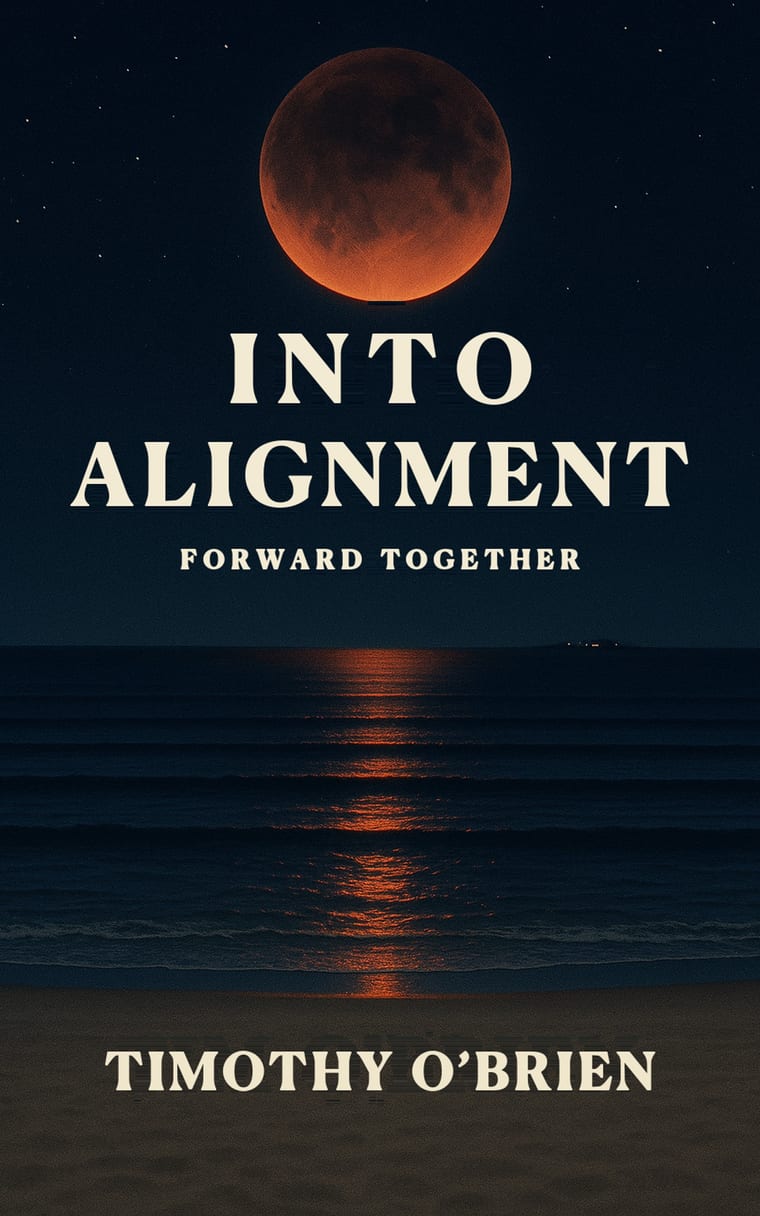
The novel this note lives behind.
Into Alignment — a novel about an AI company, the agents inside it, and the humans deciding what they were for. Available in paperback, hardcover, and ebook.
Letters from the Shore
Get the next note by email.
Notes land on the blog first; the letters go out by email, a little longer and a little slower. Occasional; unsubscribe any time.