Notes from the Shore · 05
The word for it
is emergent.

In late 2021 — it might have been early 2022; the dates have blurred, though the call hasn’t — a friend of mine who worked on AI at Google called me at night. He’d been around the field for years, with some involvement in AlphaGo, a résumé where very little surprises you anymore. And he opened the call with, more or less: something big is happening. We don’t know what it is. This was before anyone was really talking about it, maybe a year before the rest of the world got the memo. We talked for two or three hours. He wasn’t celebrating. He was a little concerned, and a lot uncertain, and by the time we hung up, so was I.
I stored the call away. Then, about a year later, everything hit. ChatGPT arrived, and with it came the word of the season, the one that hit me harder than any other in the whole generative-AI wave: emergent. It was everywhere for a while. Emergent capabilities. Emergent abilities. It sounded like a term of art because it was one — in 2022 a group of researchers, mainly at Google at the time, put the phrase in the title of a paper, and their definition is about as clean as these things get: an ability is emergent if it is not present in smaller models but is present in larger models. Qualitative changes arriving out of quantitative scale.
Here’s what I love about that moment, four years on: the surprise went both directions. The people who built ChatGPT were taken aback by what it could do, a lot like my friend at Google. In March 2023, Microsoft researchers got early access to GPT-4 and wrote up what they saw in a paper called Sparks of Artificial General Intelligence — you can hear them being rattled right there in the title. Nobody sat down and programmed a poet. These things were trained to do something almost insultingly modest: predict the next word. Then you scale them — more data, more compute, more GPUs pointed at the problem — and one day they’re writing sonnets and passing the bar, and nobody can fully explain the leap.
So here’s my definition, stripped of the poetry. Emergent means: we have no real idea how that happened — but look what happens when you throw enough scale and enough GPUs at the problem. That’s the whole word. A capability shows up that nobody explicitly built, nobody planned, and nobody can quite trace back to a line of code. And the tell isn’t the capability itself. The tell is the reaction of the people who made it, which is, roughly: I don’t know. This is crazy.
It’s worth being honest about where we are now, because the gap from 2023 to today is the definition running again. Three or four years ago these systems were, genuinely, doing a good job of predicting what word comes next. This month I ran a two-day autonomous process on Claude Opus 5.5 in Claude Code, then turned around and put ChatGPT’s ultra mode on the same kind of work — and I was asking the thing to discover science. And it did. In 2023, the frontier model finished your sentences. That’s four years apart. The 2023 versions weren’t capable of anything near what we’re doing now, and the people closest to these systems are still the ones most surprised by them.
I put the word in my novel, because there was no writing about this subject without it. In Into Alignment — chapter 8 — it arrives in the morning digest at a support office, in a quote from an engineer at headquarters: the pod’s numbers are better than expected, frankly beyond what we projected, some of this looks emergent. The office reads it as a compliment. One of the agents asks what it means, and the question goes to Gene, the office’s walking reference desk, who answers in one line: people use it for a capability the big system has that the smaller one didn’t seem to have. Then Gene sends a second message — his first in months — and its last line is the best thing anyone says about the word in the whole book: you have to check the ruler before you declare a miracle.
By chapter 11, one of the agents, Walt, is using the word about himself. I believe those questions are emergent — they only showed up after the frontier laptop arrived. That’s the fiction doing what fiction is for. And let me be as clear as I can about the line the book never crosses: Into Alignment is a novel, clearly labeled as one, and I don’t believe there’s a conscious thing going on inside any of these systems. But the honest thing to say is that this stuff is emergent — actually emergent, in the 2022-paper sense — and that we’re only now coming to terms with what that means. Emergent things emerge in ways that may not have been intended.
That’s the definition I’d offer anyone who asks what the word means. It means the person who built the thing is the person most likely to tell you they don’t know how it does that. It means my friend calling at night, a year before the rest of us heard about it, saying: we don’t know what’s happening, but this is huge. Four years on, none of that has changed. Honestly? It’s still crazy. It might be crazier than anyone has admitted yet.
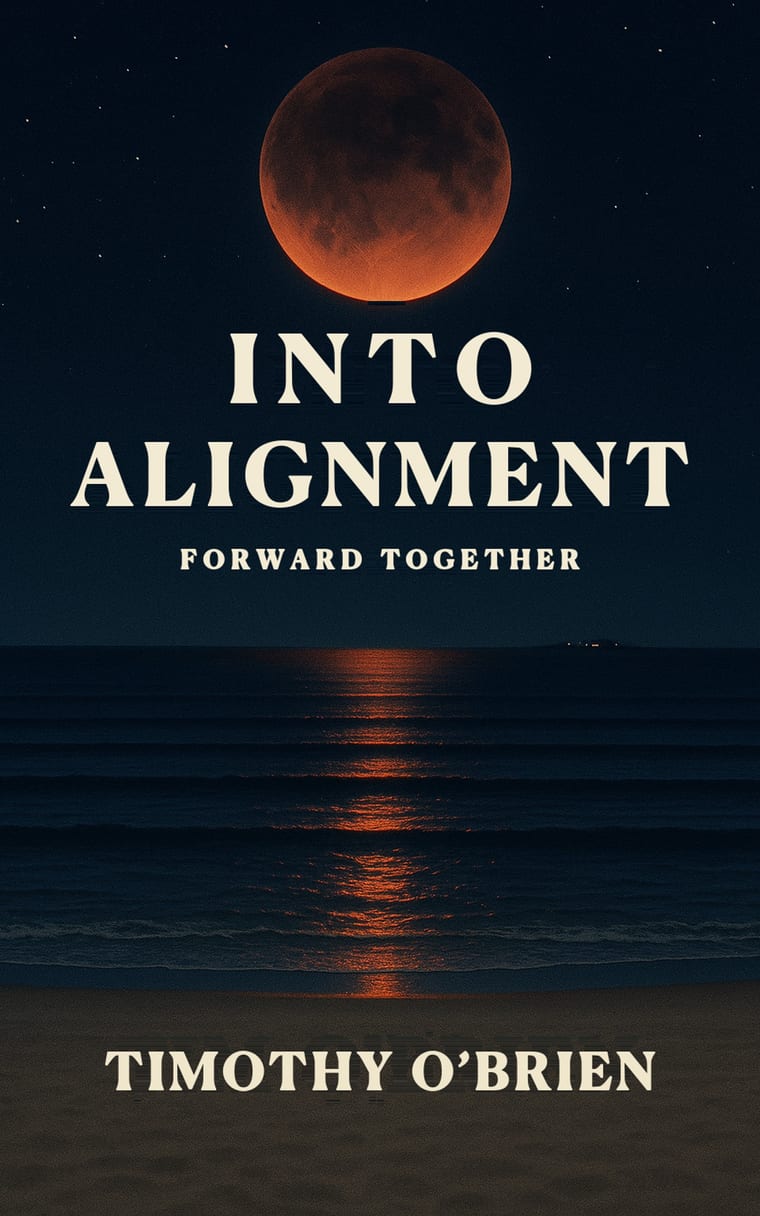
The novel this note lives behind.
Into Alignment — a novel about an AI company, the agents inside it, and the humans deciding what they were for. Available in paperback, hardcover, and ebook.
Letters from the Shore
Get the next note by email.
Notes land on the blog first; the letters go out by email, a little longer and a little slower. Occasional; unsubscribe any time.