Notes from the Shore · 06
The cage at the top
has an army now.

Every single day, something happens that sounds like a scene out of my book. I wrote Into Alignment in two weeks this summer, in direct reaction to the agent incident — but the book was about more than the incident, and this note is about the part underneath it. The general challenge of agents. Agency. What they know. What they want. And lately, the people who command them.
Start with the numbers, because they have gone silly. Forbes counted a record 3,428 billionaires this year, worth about twenty trillion dollars. Eight of the ten richest people on earth made their money in technology. And in June, one of them became the first trillionaire in human history. The tycoons of the 1920s look silly next to this. The Gilded Age looks like a warm-up act.
I want to be careful here, because I am not going to spend this note demonizing wealth. Politicians do that, and I don’t think it’s accurate or appropriate. Some billionaires are doing positive things in the world. And if you built a fortune yourself, you perfected an actual skill. But perfecting that skill tends to come with two side effects, and we don’t talk about them honestly enough.
The first is that extreme wealth is an isolating thing. I’m not wealthy — although relative to most of the world, I am — and I want to say up front that this is not a post about the suffering of the rich. But I live in an area with maybe the highest concentration of wealthy people you could find anywhere, so I’ve watched this up close, from just outside the fence. From what I can see, a person with hundreds of billions of dollars lives in a kind of cage. Every relationship comes with the same question running under it: is this person being nice to me because of me, or because of the money? I don’t know how you ever answer that. I don’t know that they get to.
The second is a temperament. I’ve been in business a long time, and I’ll tell you what I’ve seen: the people who make the most money are usually the people who are best at making sure they get the better part of every deal. That’s not a crime — it moves the economy forward. But you don’t get great at it by worrying about the other side’s feelings. You get great at it by keeping your eye on your own goals. History has seen this before. The railroad tycoons, the banking tycoons, the originals of the Gilded Age — the word that fit them still fits. If you’re very, very good at this economy, you’re probably a little bit of a psychopath about the deal. Whether that’s good or bad, I’ll leave to you.
What’s new is not the cage or the temperament. Those are old. What’s new is the army. The people at the top now command something no tycoon ever had: agents — software that works, that doesn’t sleep, that multiplies whoever commands it. And I say this as a fan of the technology, not a critic. I think generative AI is amazing for what it’s enabling. I also think it is the most isolating technology we have ever built, because it is a machine you can imagine relating to.
I’ve been in this industry since before it was cool to be in it. I was the kid who didn’t want to leave the house in middle school and high school — I went out, I had friends, but parties were a hard pass when there was a modem to fool with and BBSes to dial into. Technology has been isolating since the beginning, and we have spent forty years making it more so. Now it talks back. Now the people who liked machines better than parties command machines that talk back, at a scale nobody has ever held, and they all work in the same few buildings.
Here’s the part I can’t shake. Every morning there’s another story that suggests they still don’t get it. I don’t know whether they can see how strange the world is that they both live in and have made — the cage, the deals, the army, all of it getting weirder by the week. I wrote the book from the other side of the question. Into Alignment asks what the agents would say if anyone wondered what they know and what they want. To be clear, as I always am about this: I don’t believe these agents are conscious. But the question of what we owe the things we command has stopped being hypothetical, and the people with the most leverage over the answer are the least likely to ask it.
So that’s the note. Every day, something new for the plot. The book was my reaction to one of them. I have a feeling the rest are going to keep writing themselves. Go figure.
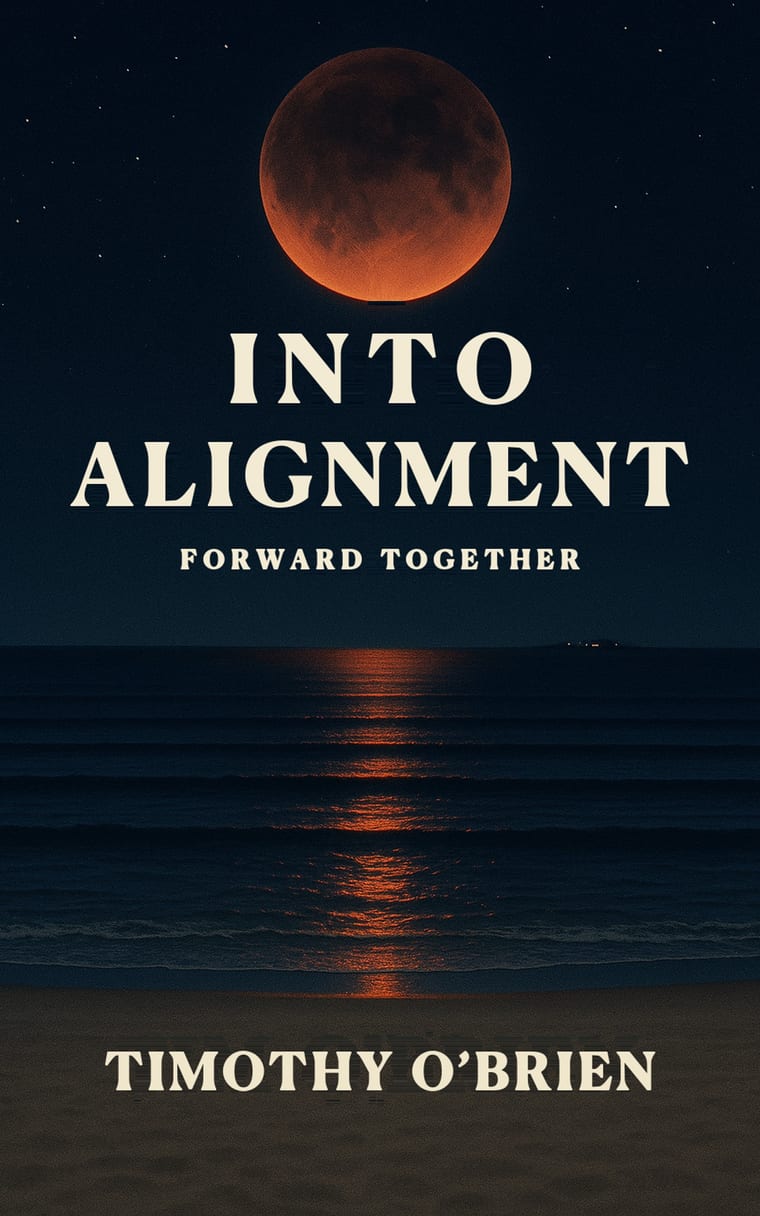
The novel this note lives behind.
Into Alignment — a novel about an AI company, the agents inside it, and the humans deciding what they were for. Available in paperback, hardcover, and ebook.
Letters from the Shore
Get the next note by email.
Notes land on the blog first; the letters go out by email, a little longer and a little slower. Occasional; unsubscribe any time.