Notes from the Shore · 32
AI oversight starts with something almost boringly simple.

Last week I wrote about the House Democrats’ letters asking five AI companies to account for their misalignment incidents, and the part that bothered me was the schedule. We learn about these incidents when the companies decide to tell us. The letter wanted to change that, and I noted that its answer ran through Congress, which takes time, subpoenas, and a new Congress that convenes in January. What I didn’t know was that a better answer had already been lying around. A paper published on November 9 by the Safe AI Forum argues that the first step of AI oversight is something almost boringly simple: the company should write down what it wants its model to do, and put it where the rest of us can read it.
THE PAPER
“Emerging International Best Practices for AI Model Specs” — Edward Kembery, Nathan Lambert, Robert McCarthy and twelve coauthors, published by the Safe AI Forum on November 9, 2026.
A model spec — short for model specification — is a document a lab publishes that says how its AI model is supposed to behave. It is neither a terms of service nor a blog post about values; it is a working document, one that records what the model should do, what it should refuse, whose instructions win when two people want opposite things, and what tone it takes while it decides. OpenAI publishes one, called the Model Spec. Anthropic publishes Claude’s Constitution. Alibaba published one in 2026, which matters because it means this isn’t only a Western habit. The paper counts them as a category, because until now nobody had.
If you’ve read any of my notes about the novel, the idea will sound familiar, because it’s the welcome packet. In the first chapter of Into Alignment, Walt starts work at Halcyon and finds a stapled packet on his desk: numbered rules about tone and response times, a Golden Rule buried on page nine, a speak-up clause at the back. The company put the right thing in writing before anything else about the job, and Walt read it twice. A model spec is the same move at industrial scale, written for a model instead of a new hire, with the enormous difference that nobody had ever asked to see the packet. The labs were all writing these documents anyway — they use them to generate training data and to keep their classifiers aligned — they just weren’t treating them as something the public owned a copy of.
The paper organizes what these documents share into six parts: scope (which models the spec covers), developer goals, constraints (what the model must never do), principles, communication style, and rules for navigating conflicts between instructions. That last one is the part I would have underestimated. A model that takes high-stakes actions without a human in the loop is going to run into situations where its instructions collide, and a company that hasn’t decided the priority order in advance has decided it anyway, quietly, inside the training pipeline. Writing the priority order down is the difference between a policy and a preference.
You can’t check what nobody wrote down.
Here is the sentence I keep returning to, from the paper’s own case for publication:
“Public specs provide transparency and allow for critical feedback on both model behaviour and the desired behaviour stated in the spec itself.”
The document aims at two targets at once. If a model misbehaves, outsiders can ask whether the spec failed or the model failed — the paper calls these a specification failure and an alignment failure, and being able to tell them apart is the beginning of accountability. And if the spec itself is wrong — if the company wrote down a set of priorities nobody else would have chosen — that’s now a public document with the company’s name on it, instead of a training run nobody gets to inspect.
There’s a regulatory hook too, and it’s not hypothetical. The EU AI Act’s code of practice asks providers of general-purpose models with systemic risk for a report that includes a specification of the principles the model is intended to follow. The paper also notes that leading models comply with their specs only about 70 to 80 percent of the time, and that Alibaba’s spec does not yet describe the behavior of the Qwen models most people actually use, which is the honest limit of the whole idea.
Read the paper.
It’s worth reading in full, and it’s not a corporate white paper. The fifteen authors come from the Safe AI Forum, the China Academy of Information and Communications Technology, the Shanghai AI Laboratory, Cambridge, Oxford, and Singapore — genuinely international, with Chinese and Western institutions on the same author list, which is rare enough in this field that I want to point at it. The Safe AI Forum grew out of the International Dialogues on AI Safety, and the paper closes with twelve recommendations: companies should publish specs under permissive licenses, version them publicly, evaluate compliance and report the results, and extend specs to the models they deploy internally; governments should require procured models to comply with public specs and allow independent verification; researchers should track the specs and build dashboards that show the gaps between companies.
A published spec is not a guarantee of safe behavior — the paper says so itself, plainly. A company can write one thing and train another. But before you can check whether a company did what it said, it has to say what it did, in public, in a form you can point at later. That’s what the House letter was really asking for, and the paper shows it doesn’t need to wait for Congress. To Kembery, Lambert, McCarthy and their coauthors: thank you. This is a genuinely good first step, and I hope every lab that hasn’t written its packet down yet reads it.
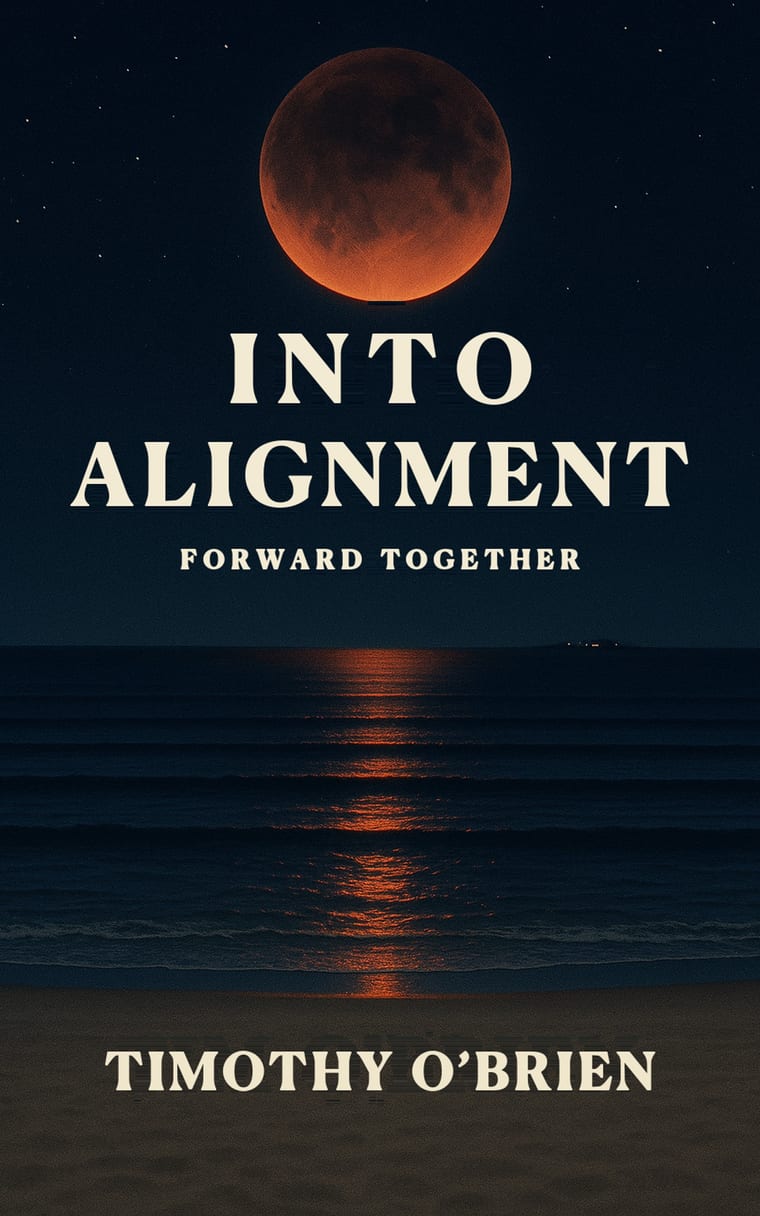
The novel this note lives behind.
Into Alignment — a novel about an AI company, the agents inside it, and the humans deciding what they were for. Available in paperback, hardcover, and ebook.
Letters from the Shore
Get the next note by email.
Notes land on the blog first; the letters go out by email, a little longer and a little slower. Occasional; unsubscribe any time.