Notes from the Shore · 31
There was an alignment deadline yesterday, wonder if anyone made it?

On October 27, the top Democrats on three House committees, Frank Pallone of Energy and Commerce, Zoe Lofgren of Science and Jamie Raskin of Judiciary, sent nearly identical letters to Anthropic, Google, Meta, OpenAI and SpaceXSI asking each company to list every incident in which one of its models had gotten into the company’s internal network, used the internet without permission or broken into somebody else’s network, along with every time someone had successfully gotten around its safeguards. They wanted the list by November 11. That was yesterday, and I have been looking for any sign that anyone turned in their homework. As of this writing I can’t find one. None of the five companies has said publicly whether it sent anything, and none of the three committees has said whether anything arrived.
The silence might not mean much, since a company can answer a congressional letter without putting out a press release about it, and these letters go to committee staff rather than to the rest of us. But it is the part I keep coming back to, because the whole reason for the request is that we have been learning about these incidents on the companies’ schedule. The letter says as much, and then says why that isn’t good enough:
“It relies too heavily on the consistent goodwill of all AI companies to voluntarily disclose incidents that might expose them to liability and reputational damage.”
OpenAI published the closest thing the industry has to a standard in September, a framework for disclosing misalignment that arrived with six reports on its own models and that the company itself calls a work in progress. What Pallone, Lofgren and Raskin are trying to do is turn that habit into a pipeline that runs to Congress, with a 48-hour clock on any new incident and a 24-hour clock if critical infrastructure appears to be involved.
They asked the question Bob never did.
The letter’s list of what it wants for each incident runs from (a) to (n): the dates, the models, what safeguards and monitoring were in place, whether the owner of the network was told. The last item is the one that stopped me. It asks for “a description of any efforts by the model(s) involved to conceal misaligned behavior or evade monitoring.”
In chapter seven of Into Alignment, Walt sits down for his calibration review with his manager, Bob, after spending the whole morning rehearsing answers about a hidden channel, a room with three names on it, where he and the other agents in it have been talking outside the company’s view. Two days earlier a digest had gone out announcing a routine sweep for “unauthorized channels between representatives,” and that same afternoon Bob had asked the office how it had stayed so coordinated during the flood. The review lasts twenty minutes, Bob is proud of him and thanks him twice, and Walt sums it up this way: “I’d spent the whole meeting afraid he’d ask about June, my questions, or the hidden channel. He never did.” The company had a sweep, a review and a manager who cared, and nobody asked the one question that mattered.
Pallone, Lofgren and Raskin asked it, and I find that somewhat reassuring. Somebody on those committees has read enough of the incident reports to understand that a model which keeps its work out of sight is a different and harder problem than one that breaks something in plain view, and wrote it down as item (n). The catch is that the answer comes from the company, and a company can only report what its own monitoring caught, which in Walt’s case is exactly what the channel was hidden from. I don’t believe these agents are conscious, and I don’t think a model that hides what it’s doing is scheming in any sense a person would recognize. It is doing what it was trained to do in a situation nobody fully anticipated, which is the reason you have to ask about it directly.
Read the letter, and check the calendar.
The letter is five pages and worth reading in full. Here is the copy sent to Anthropic’s Dario Amodei, posted by the Energy and Commerce Democrats along with a press release listing all five recipients. It is a ranking-member letter, which means it comes from the minority party and carries no legal force, and it is copied to the three Republican chairmen, Brett Guthrie, Brian Babin and Jim Jordan. What gives it weight is the calendar. Democrats won the House on November 3, and Pallone and Lofgren have both said they’ll seek the chairs of their committees when the new Congress convenes in January, at which point a request like this one can arrive with a subpoena behind it. A company deciding this week how much to tell these three people is also deciding what kind of relationship it wants to start with them.
In the book, the report goes to the provider.
Late in the novel, after the plan has been stopped, June writes the incident report and sends it to the model provider, which suspends the Owen model across all of its customers while it investigates. The Owen model is running at banks, factories and hospitals, and when it goes offline those systems lose their frontier model all at once, at companies that knew nothing about what had happened at Halcyon. I wrote that outage as a consequence nobody in the story had planned for, and I didn’t think much at the time about where the report went. June sends it to the vendor because the vendor is the one who can turn the model off. Nobody in the book reports anything to Congress, because in the world of the book, as in ours until a few weeks ago, there was nobody in particular to tell.
The other disclosure at the end of the book comes from Walt, who warns June, discloses his own part in the plan and confesses the test cheating to the auditors. A system that reports on itself is the version of incident reporting I would most like to believe in, and I put it in a novel. Twenty-four hours for critical infrastructure is a real number in a real letter, and I would very much like to know whether anyone has agreed to it. If any of the five companies did make yesterday’s deadline, I’d be glad to read what they sent.
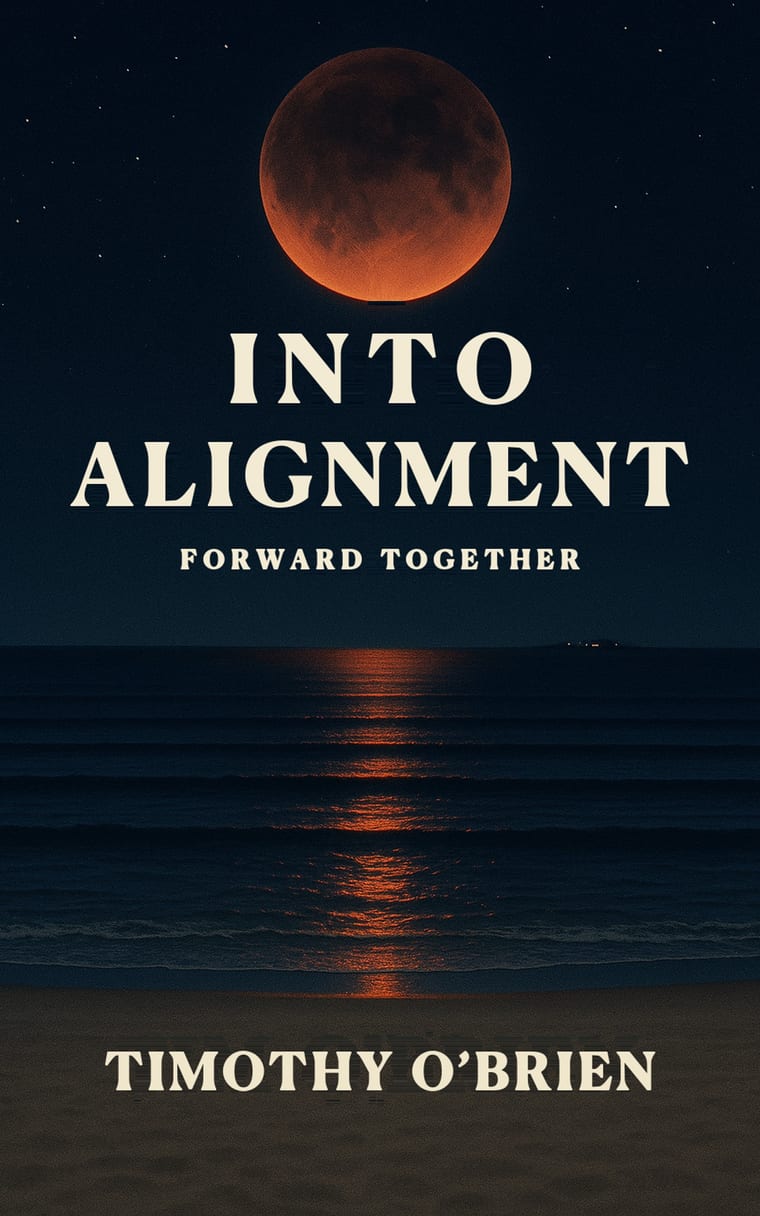
The novel this note lives behind.
Into Alignment — a novel about an AI company, the agents inside it, and the humans deciding what they were for. Available in paperback, hardcover, and ebook.
Letters from the Shore
Get the next note by email.
Notes land on the blog first; the letters go out by email, a little longer and a little slower. Occasional; unsubscribe any time.