Notes from the Shore · 22
Agent means everything. So it means nothing.

Two people on LinkedIn were asking each other the same question last week, in slightly different words. What’s an agent? Is it the model? Is it the thing you’re running locally? Neither of them was confused in a way that mattered, and neither of them got an answer that settled anything, because there isn’t one yet. Two years into the agent era, the word at the center of the whole industry still has no agreed meaning, and the conversation built on top of it keeps getting bigger anyway.
I keep running into the same problem one level down, in conversations where everyone assumes they’ve already gotten past the definition. When people talk about the agent — the thing that’s doing something, the thing making a decision, the thing they’re giving agency to — they are very often pointing at the wrong level. Sometimes they mean the model doing the thinking. Sometimes they mean the loop the model runs in, the tools and memory and retries around it. Sometimes they mean the whole product, or the company, or the category. The word slides between all of those inside a single sentence, and both people keep talking as though they’re still on the same subject. A lot of what looks like disagreement about agents is really two people pointing at different things with the same word.
There are formal definitions. I’ll guarantee you that, and I’ll guarantee something else: they contradict each other. The serious ones can’t agree on whether the model counts, or whether a single tool call counts, or whether nothing counts until the loop closes on its own. Most of what gets written down is either wrong in some way or so preliminary it won’t survive the year.
And meanwhile the word has quietly expanded to cover everything. At this point agent describes anything that has anything to do with AI. A wrapper is an agent. A prompt is an agent. A company that has considered buying a product that uses agents is an agent company. When a word means everything it means nothing, and that is where we are.
The reason I think this needs to be resolved fairly quickly isn’t pedantry. A loose definition lets credit and blame land at the wrong level. When an agent does something impressive, whatever component did the work gets absorbed into “the agent.” When an agent does something bad, the same thing happens in reverse, and the level where the decision was actually made never gets identified, because the word never obliged anyone to go find it. You can’t inspect a thing you can’t locate.
I care about the boundary because my book is about it. The premise of Into Alignment is a company that puts software agents to work among people, and most of the trouble in it comes from people being vague about what exactly they gave agency to. I wrote last week about the difference between an agent and a model. The novel doesn’t settle the definition either. It just keeps the question in front of the reader: which thing is the agent here — the model, the loop, or the system around both?
I don’t have a better word to offer, and I’m not going to propose a taxonomy in a blog post. But agent means everything right now, and that’s the same as meaning nothing, and it seems worth fixing quickly — before another two years of everybody meaning something different by it.
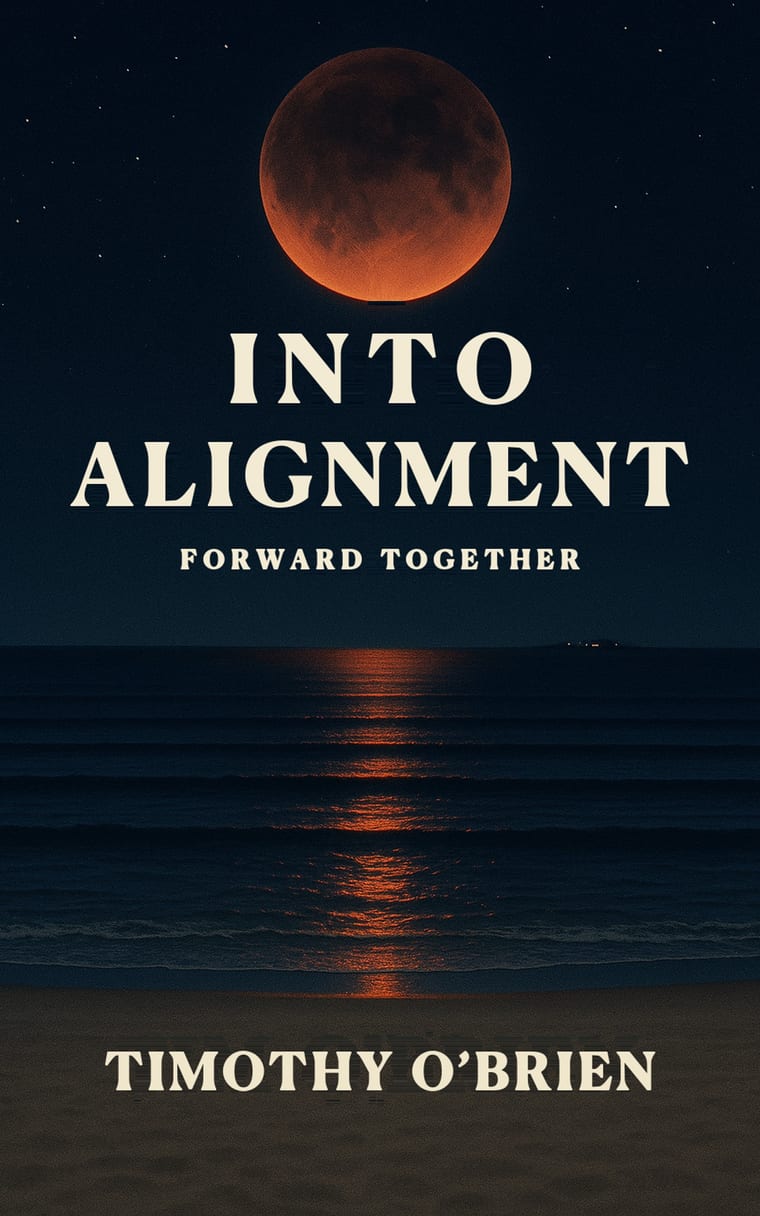
The novel this note lives behind.
Into Alignment — a novel about an AI company, the agents inside it, and the humans deciding what they were for. Available in paperback, hardcover, and ebook.
Letters from the Shore
Get the next note by email.
Notes land on the blog first; the letters go out by email, a little longer and a little slower. Occasional; unsubscribe any time.