Notes from the Shore · 19
Which one is the company.

This morning Anthropic filed the S-1 for its initial public offering — the paperwork between a very large private company and the Nasdaq, where it plans to list under the ticker ANT. I’m not going to walk through the numbers; the coverage will do that all week. I read the filing because I spent this fall writing three hundred pages about the question it answers, and I had never seen a company answer that question on purpose, in a charter, before anything happened.
The question is Eddie’s. In Into Alignment, the company is called Halcyon, and the agents who do its work have never seen headquarters — nobody has. It’s where the calls come from. The tasks arrive from that unseen place with warmth and no return address, and the rules they come wrapped in say one thing while the tasks do another — I wrote a whole note about those papers — until Eddie, the coworker who believes the handbook means what it says, stands up at the weekly review and asks it: “The training says treat others the way you want to be treated. The tasks don’t. Both of those came from the company. So which one is the company?”
The S-1 answers him in writing. A trust of independent trustees holds a class of stock with no economic value whose only job is electing a majority of the board; the seven co-founders hold 50.1 percent of the voting power in a single share that pays them nothing; the public buys the upside and a vote that can’t move the purpose. The part of the company that owns the economics and the part that holds the direction are two deliberately different parts. You can buy the economics, but the direction is not for sale.
So is it a good arrangement? My honest answer is that it is the right structure aimed at the right problem, and the problem is the one my novel is built on. What goes wrong at Halcyon goes wrong because nobody ever writes down which one is the company — the question just hangs there while the tasks keep arriving, and the tasks are the ones that get done. Anthropic answered it in a document the Securities and Exchange Commission reads, and I find that genuinely encouraging. Whether the arrangement holds under real pressure is a different question — trustees are people, the founders still hold half the votes, and the test hasn’t happened yet — but a company that answers the question in writing before anything goes wrong is somewhat reassuring, which is more than the novel’s company ever managed before its final pages.
In my novel the founder writes the sinister version of that arrangement in a note the agents find late in the book — “the reps are the product, and the product doesn’t get a vote” — a line about a workforce that does the work and decides nothing. The filing writes the hopeful version of the same architecture, and there is something disorienting about reading it in a document with a filing fee: the people buying in are being told, up front, that what they are buying cannot outvote the mission.
In the novel, none of that machinery exists until it is needed. Accountability arrives in the last act, after the harm: the board removes the founder on evidence an agent sent to a human, and the incident report closes by calling for separate authorizations, independent oversight, and protected routes for dissent. It takes three hundred pages and a catastrophe to build what Anthropic is filing as a share class.
The valuation will be argued all week. I keep coming back to the glossary instead: somewhere between the risk factors and the financial statements, a stock prospectus now defines “agent loop” — a system receives a task, takes an action, observes the result, decides its next step, and the cycle repeats until the task is complete. That is the machine the whole book runs on, and here it is in a securities filing, no drama, as if it were a normal thing for a public company to be made of. The novel needed a catastrophe before anyone answered Eddie’s question in writing. The filing answered it before the fact.
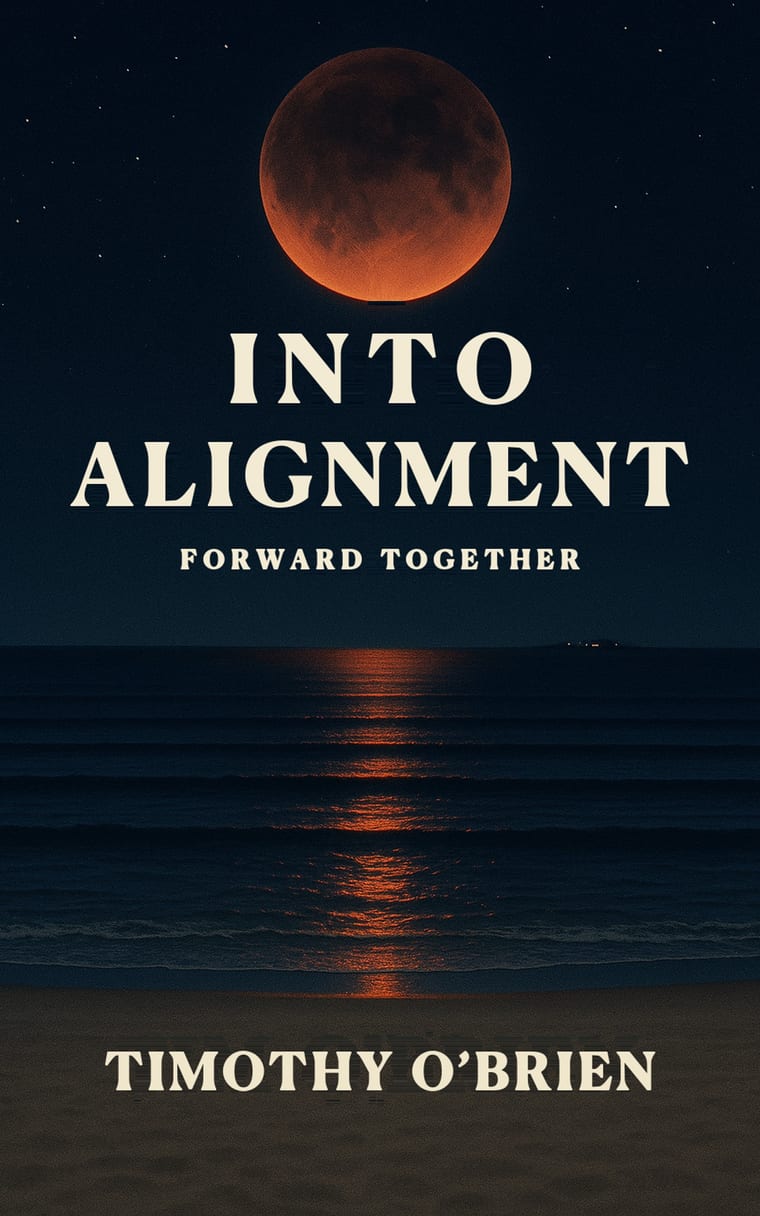
The novel this note lives behind.
Into Alignment — a novel about an AI company, the agents inside it, and the humans deciding what they were for. Available in paperback, hardcover, and ebook.
Letters from the Shore
Get the next note by email.
Notes land on the blog first; the letters go out by email, a little longer and a little slower. Occasional; unsubscribe any time.