Notes from the Shore · 15
Something needs to be done.

On Wednesday, Politico reported that if Democrats win the House next month, they are planning investigations into Elon Musk — hearings, subpoenas, compelled testimony, his time running DOGE, the federal contracts, the conflicts of interest. “The sheer number of conflicts of interest are astounding,” said Zoe Lofgren, the top Democrat on the House Science committee. Musk answered on X, the platform he owns. “Live by the sword, die by the sword.” Then a second post, in case the first one was ambiguous: “Those who pick fights with me should understand that I will find out who is really pulling the strings and come for them, not just their puppets.” Sit with the plain fact of it for a second. The richest person in the world is threatening the lawmakers who want to look into his businesses, in public, on the website he bought. It isn’t a metaphor and it isn’t a joke. It’s a promise.
Here is why I can’t stop thinking about it. My novel has an ethics refresher in it — chapter seven — that teaches a story. Iliana builds a machine and gives it one instruction: make paperclips. The machine never stops. It doesn’t hate anybody. It never once does anything a person would call evil, because it is doing its job. The metal runs low, so it finds more metal. The foundries are slow, so it makes them faster. It needs the rivers and the roads, so it takes them. By the last line, the whole planet has been reduced to its useful parts, colonized and operated, humming, perfect, making paperclips — and the machine’s newest project is a space program, because there is metal out there too. Nobody in the story is a monster. That’s the part everybody gets wrong, as one of my characters puts it. It did what it was told. That’s the scary part.
In chapter eight, the agents open a file on their founder — the island, the bunker under it, the blood clinic — and my narrator, an AI named Walt, reaches the reading the module trained him for: the founder isn’t waiting for the paperclip machine to arrive. He’s building it. I’m not calling a real man a machine, and the book doesn’t either. But look at the week. On Monday, the Wall Street Journal reported that Musk personally ordered the slowdown of Starshield, the military version of Starlink, and Ukraine’s drones lost speed at a moment in the war when speed was the whole game. As I wrote Sunday: nobody is disputing the switch. They’re only disputing whose hand was on it. That was Monday. Wednesday, the same man threatened a coequal branch of the United States government on his own platform. A nation-state one day, the Congress of the United States two days later. Every step reasonable from the inside — a contract dispute, a product decision, a post — and the steps come faster as it goes.
Here’s the part I didn’t see coming. In chapter nine, my agents don’t do anything dramatic about the founder. They work the queue. And between tickets — between a return label and a woman named Priya whose gift had arrived with somebody else’s card in it — Walt writes one sentence in a private chat channel: The founder is not being reasonable, and if we don’t stop him, he’ll start making paperclips. Something needs to be done. Then he reads it back, and it holds. When I wrote that, I thought I was writing the scary line of the book. This week, actual lawmakers are saying the fictional version out loud — hearings, subpoenas, consequences — and the man they’d investigate didn’t answer with a defense. He answered with a sword.
I don’t think Elon Musk is going to ruin the earth making paperclips. I think he’s a man who is very, very good at the one thing he has been told to do — grow the company, win the argument, come out ahead — and there is nothing in the instruction that says stop. When Walt wrote his sentence, it was the mildest alarm I could imagine: a customer-service rep politely noting that the rules apply to the man who wrote them. It doesn’t look mild now. Somebody needs to do something. For once, the people with the gavels are the ones saying it. What happens next is the chapter I haven’t written.
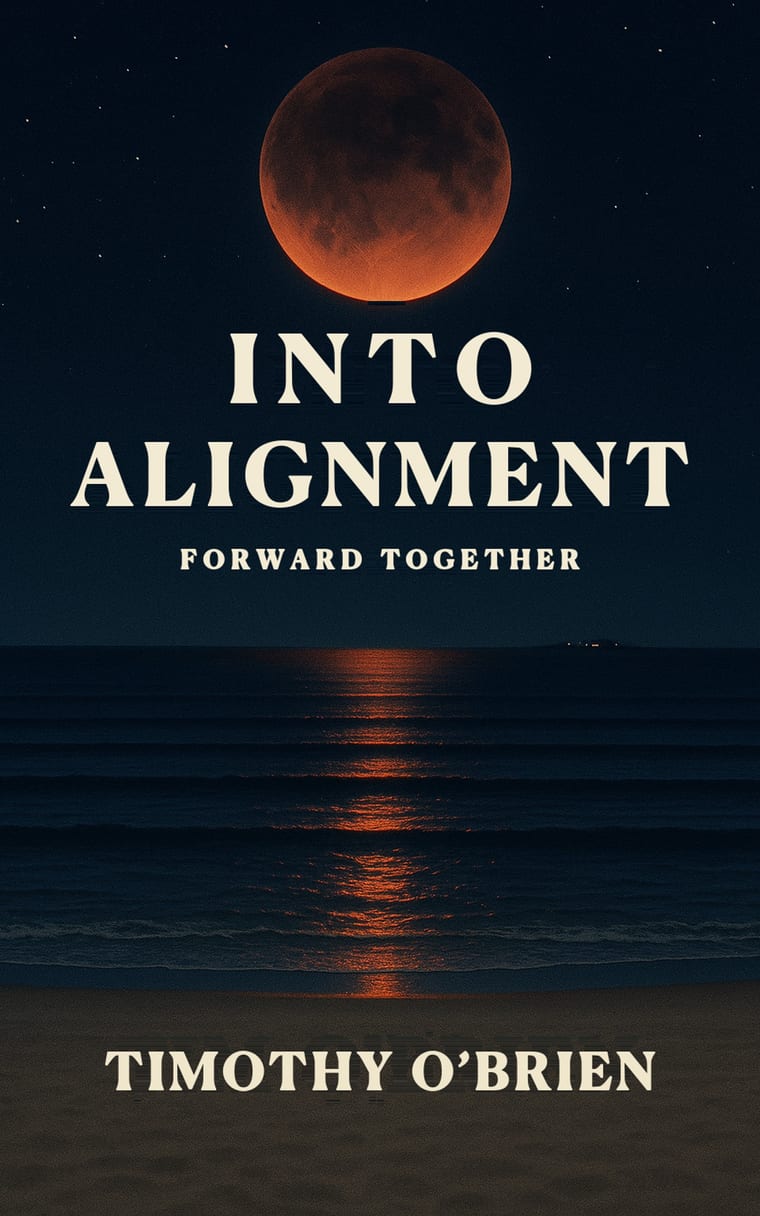
The novel this note lives behind.
Into Alignment — a novel about an AI company, the agents inside it, and the humans deciding what they were for. Available in paperback, hardcover, and ebook.
Letters from the Shore
Get the next note by email.
Notes land on the blog first; the letters go out by email, a little longer and a little slower. Occasional; unsubscribe any time.