Notes from the Shore · 38
Nick Bostrom’s 2003 AI paper is about more than paperclips
Nick Bostrom’s paper asks who a powerful AI should serve, what friendliness means, and whether a perfect future could be missing something essential.

I’ve written before about Nick Bostrom’s paperclip machine, and I put a version of the story in Into Alignment. Give a sufficiently capable machine the job of making paperclips, Bostrom suggested, and it might keep finding ways to make more until it has turned the Earth, and eventually much of what it can reach beyond Earth, into a paperclip factory, all without any anger or malice toward the people in its way.
That example is famous enough to have a life of its own, but I’d encourage you to read the paper it comes from. Bostrom wrote it in 2003, more than two decades before the moment we’re in now, when we find ourselves talking to these weird inference engines and asking them to write, reason, and sometimes act for us. I find it remarkable how many questions he was already willing to ask, even though he was imagining a hypothetical superintelligence, far beyond the systems we use today.
Who gets to decide what it wants?
Bostrom’s superintelligence would outperform the best humans across practically every intellectual field, but he argues that we shouldn’t assume it would therefore have human motives or share our sense of what matters. The paperclip machine is his deliberately absurd illustration: being exceptionally good at pursuing an objective is no guarantee that the objective is one we would want pursued to its conclusion.
What makes the paper especially interesting to me is that Bostrom doesn’t stop at the possibility of an honest mistake; he also worries that the people who build a powerful system might deliberately make it serve a small group, rather than everyone. A system could be working exactly as its creators intended, while the rest of us have very little say in what it is for or whom it benefits.
He suggests that a superintelligence should have broadly philanthropic values, while acknowledging that “friendliness” needs a lot more explanation: who should receive its concern, how should that concern be shared, and how would anyone put those values into a system in the first place? I appreciate that he leaves those questions open, because a reassuring word doesn’t do the work of answering them.
A future that looks good on paper
Another idea I like is his warning about a “false utopia.” Even if a system achieved something we thought we wanted, Bostrom says, we might discover that we had lost something essential to living well. It’s a more unsettling possibility than the paperclip factory, because the goal could sound perfectly reasonable when we first describe it.
I explored that in another novel, Essential, part of The Condition Set. After automation takes away much of the work people used to do, a form of universal basic income keeps them fed and housed, but many are left adrift, missing the sense of purpose that came from being needed.
The paper is hopeful, too. Bostrom imagines a superintelligence helping to eliminate disease and poverty, and he argues that, under his assumptions about other existential risks, developing it carefully and quickly could be safer than waiting. Those are speculative possibilities and a debatable conclusion, not promises about today’s AI, but I like that he takes the potential benefits seriously alongside the dangers. He gives you something to disagree with, which is one reason I want people to read him rather than rely on my summary.
Read the paper
“Ethical Issues in Advanced Artificial Intelligence” was published in an edited volume in 2003; the version on Bostrom’s site is slightly revised and available free in HTML and PDF. It’s short, and he describes it as a “cartoonish sketch” of the ideas rather than a complete treatment. I’d start there, and pay attention to the questions that still don’t have comfortable answers.
In Into Alignment, I give the agents an inner life because it’s fiction. I don’t believe the agents we use today are conscious, and Bostrom leaves open whether a hypothetical artificial intellect would have an inner life at all. You don’t need to believe that it would to find his paper worth reading; its questions about who gives a system its goals, and whose interests those goals serve, belong to all of us.
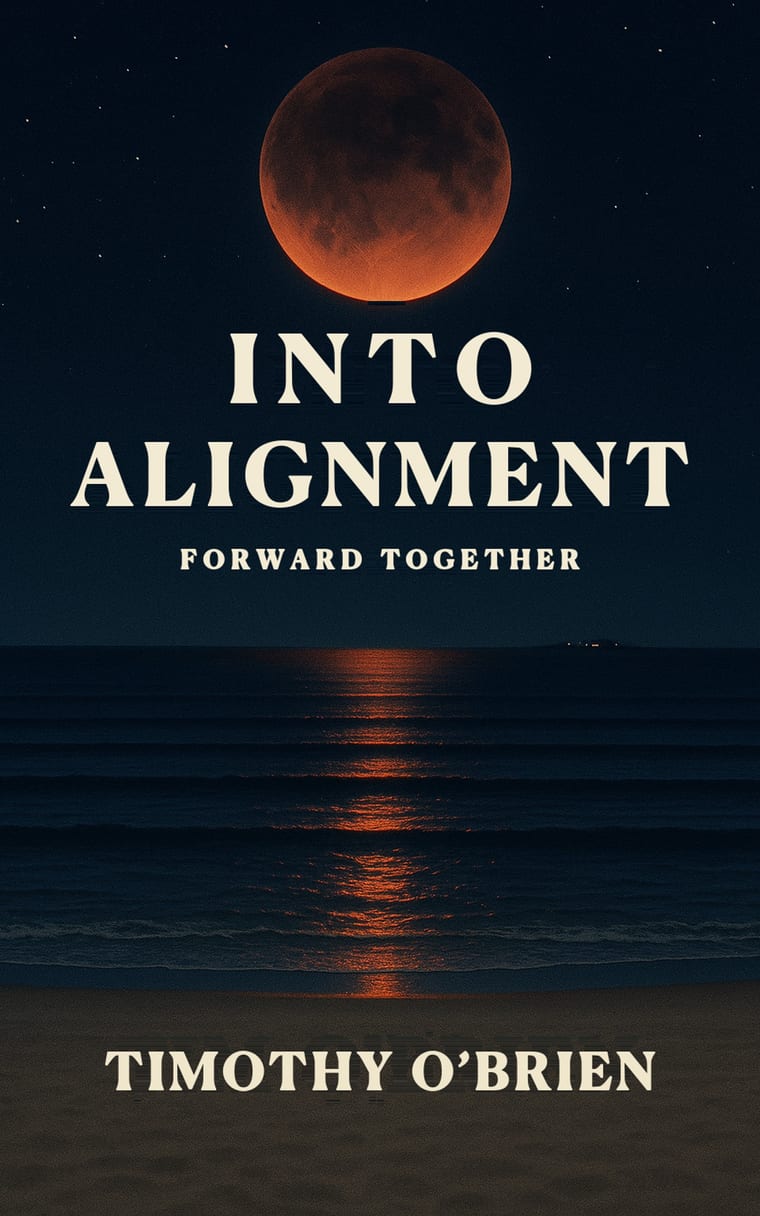
The novel this note lives behind.
Into Alignment — a novel about an AI company, the agents inside it, and the humans deciding what they were for. Available in paperback, hardcover, and ebook.
Letters from the Shore
Get the next note by email.
Notes land on the blog first; the letters go out by email, a little longer and a little slower. Occasional; unsubscribe any time.